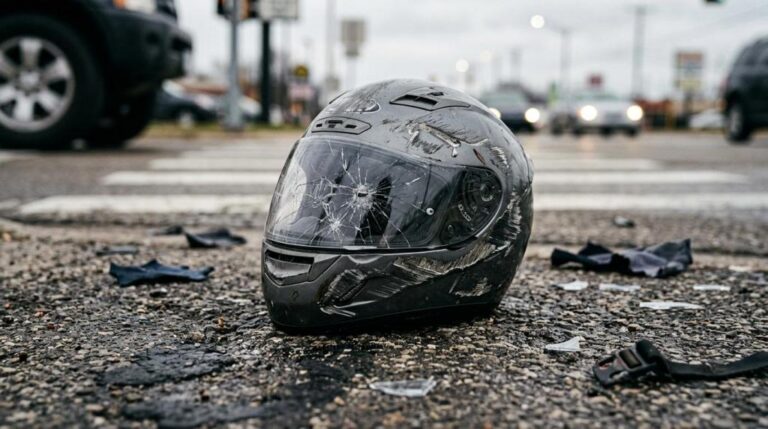


A quick ride between Brody, Wells Hall, the MSU Library, and an apartment off Grand River Avenue can feel routine until one bad turn changes your week, your semester, or much more. Around Michigan State University, scooters and bikes are part of daily life. They also put you close to cars, buses, delivery vans, rideshare drop-offs, uneven pavement, crowded sidewalks, and students crossing without much warning.
If you are a student, you may be asking the immediate questions. Do I need medical care? Who pays for this? Did I break a campus rule? If you are a parent, you are probably focused on the bigger picture. Is my child okay? Should they speak with insurance? Does this affect a claim if the crash happened near campus housing, downtown East Lansing, or on a busy road like Hagadorn, Farm Lane, or Grand River?
You need clear information fast, especially when an accident happens near MSU where campus policies, East Lansing ordinances, and Michigan traffic law can all matter at once.
By: Ben Hall | Attorney and Owner of Ben Hall Law | Marine Corps and Iraq War Veteran | Former Police Officer | Former Prosecutor
Published date: June 1, 2026
Why MSU scooter and bike accidents happen so often near campus
Michigan State is built for movement. Students travel from the STEM Building to the Broad Art Museum, from Spartan Stadium to downtown East Lansing, and from residence halls to class in every kind of weather. MSU also has a large biking culture, with bike lanes on much of campus and thousands of bike parking spaces. That helps, but it does not remove the risk.
The traffic pattern around campus is what makes these crashes so common. You have buses stopping near class buildings, cars turning across bike lanes, pedestrians stepping into crossings near the Red Cedar River bridges, and students on scooters trying to make it to class on time. That mix creates conflict points everywhere.
The busiest trouble spots are often not the obvious ones. A crash can happen at a crosswalk near Bogue Street, a turn onto Grand River by a parking structure, a sidewalk pinch point near a dorm, or a poorly parked scooter outside a store in downtown East Lansing. Add rain, snow, darkness, headphones, or a phone screen, and the margin for error gets very small.
State crash data points in the same direction. Michigan reported a rise in bicycle-involved crashes in 2023, up to 1,480 statewide. College-town traffic patterns make those numbers feel personal, because the same risk factors show up every day around campus and nearby student neighborhoods in East Lansing, Okemos, and Haslett.
| MSU-area location or situation | Why crashes happen there | Why it matters after an injury |
|---|---|---|
| Grand River Avenue crossings | Cars turn quickly, students cross mid-block, visibility changes fast | Driver fault, witness accounts, and street design all matter |
| Farm Lane and Auditorium Road | Heavy campus traffic and bikes mixing with service vehicles | Speed, lane use, and right-of-way become central issues |
| Downtown East Lansing sidewalks | Crowded foot traffic, scooter parking problems, storefront congestion | Sidewalk riding and parking rules may affect liability arguments |
| Residence hall and apartment zones | Rushed travel between classes and housing, low-light conditions at night | Photos, lighting conditions, and surveillance footage can be useful |
| Bus stops near campus | CATA buses, rideshare loading, and delivery vehicles create sudden movement | Commercial coverage and transit reports may be involved |
CTA: If you or your student was hit on a scooter or bike near MSU, get legal guidance early. A prompt case review can protect evidence before camera footage, witness memory, and app data start to disappear.
MSU campus bike and e-scooter rules students should know
Campus rules matter more than many students think. MSU requires bicycles and e-bikes used on campus to be registered, and personal e-scooters operated on campus also need to be registered through Bike Index with the permit displayed. MSU also expects bikes to be parked and locked at a bike rack. If a bike is left in bad condition or parked improperly, it can be impounded.
That does not mean a missing permit decides who caused a crash. It usually does not. A driver who fails to yield is still a driver who fails to yield. Still, insurers and defense lawyers look for any fact they can use to argue carelessness, so campus compliance is worth taking seriously.
If you are a parent, this is one of those details that seems minor until it becomes part of a claim file. A student who follows campus registration and parking rules starts from a stronger position when facts are being sorted out.
After you have your scooter or bike on campus, keep these basics in mind.
- Free campus registration
- Permit displayed and readable
- Lock at a bike rack
- Keep the bike or scooter in operable condition
MSU’s official parking resources and bicycle registration guidance are worth saving on your phone before anything happens. You can review those rules through MSU Parking Services.
East Lansing scooter regulations that can affect your injury claim
Once you move off core campus and into East Lansing streets and sidewalks, city rules come into play. The City of East Lansing adopted scooter regulations that cover how scooters are ridden and parked. Those rules are not just about courtesy. They can become part of the fault analysis after a collision.
One of the most cited rules is the 10 mph sidewalk speed limit. The city also follows a one-person rule for scooters, which means doubling up can create both safety and liability problems. Parking rules matter too, especially in high-traffic spots near Grand River storefronts, student housing, CATA stops, and restaurant entrances.
If a scooter is left blocking a ramp, crosswalk, bike lane, or sidewalk access point, that can create a separate injury risk for another rider or pedestrian. In some claims, the issue is not only who struck whom, but whether poor parking or ordinance violations helped create the hazard in the first place.
A few city rules come up again and again after East Lansing scooter crashes:
- Sidewalk speed: Scooters are limited to 10 mph on sidewalks
- Rider count: One person per scooter
- Parking position: Park upright and leave at least five feet of unobstructed sidewalk
- Do not block: Crosswalks, ramps, bike lanes, bus stops, hydrants, benches, driveways, alleys, or building access
You can review the city’s official guidance on the East Lansing electric scooter ordinance.
Michigan bicycle and scooter traffic laws that can shape fault
Michigan traffic law matters most when a car, truck, bus, or other motor vehicle is involved. One rule every student and parent should know is the state’s passing law for bicycles. A motorist overtaking a bicycle in the same direction must leave at least 3 feet to the left when practicable. If that much room is not possible, the driver still has to pass at a safe distance and safe speed.
That rule matters on roads around campus where drivers feel squeezed, especially near parked cars, lane shifts, construction, and turning traffic. Think about stretches around Harrison Road, Trowbridge Road, or areas near the Breslin Center on event days. Drivers do not get to crowd a cyclist just because traffic is busy.
Michigan law also limits carrying more people than a bicycle or scooter is built for. That sounds obvious, yet students still double up on scooters after dark or after leaving a party. If a crash happens, that decision may be used to argue that the rider increased the risk.
Fault is rarely as simple as one sentence from a police report. A driver may have turned left without yielding. A student may have been riding too fast on a sidewalk. A scooter may have been parked badly. The road surface may have contributed. More than one factor can be in play, and shared fault issues can reduce the value of a claim.
That is why evidence matters. Video from a dorm entrance, witness names from nearby students, a ride-history screenshot from a scooter app, and photos taken near the scene can do more than memory ever will.
CTA: Before you give a statement to an insurance adjuster, talk with a lawyer who handles Michigan injury claims. One early conversation can help you avoid mistakes that are hard to fix later.
Common injuries in MSU scooter and bike accidents
Even a “low-speed” campus crash can cause real harm. A student thrown from a scooter near a curb can hit their head hard enough to suffer a concussion. A cyclist clipped by a mirror may brace with an arm and end up with a wrist fracture, elbow injury, or shoulder damage. Road rash can look minor at first and still lead to scarring or infection.
Parents often underestimate how these injuries disrupt school. A hand injury can make typing painful. A concussion can affect concentration, memory, and exam performance. A leg injury can turn a large campus into a daily obstacle, especially if the student lives far from class or relies on walking between buildings.
Some of the most common injury patterns include:
- Concussions and head trauma
- Wrist, arm, and collarbone fractures
- Facial injuries and dental damage
- Knee, ankle, and foot injuries
- Road rash and soft-tissue pain
- Neck and back injuries
If symptoms show up hours later, do not brush them off. Students often try to “push through” because they have class, work, or an exam at the Broad College of Business, the Engineering Building, or another part of campus they do not want to miss. That delay can make medical recovery harder and can also create problems when an insurer argues the injury was not serious.
What to do after a scooter or bike accident near Michigan State University
The first goal is safety. Get out of active traffic if you can do it without making your injuries worse. If a car is involved or you are hit near an intersection, call 911. If the crash happens on or near campus, make sure the incident is documented by the right authority, whether that is campus police or local law enforcement.
Medical care comes next, even if you think you are mostly fine. If you hit your head, lost balance, have pain in your back or wrist, or feel “off,” get checked. Students often wait because they do not want to call their parents, miss class, or spend money. That instinct is common and it is a bad one.
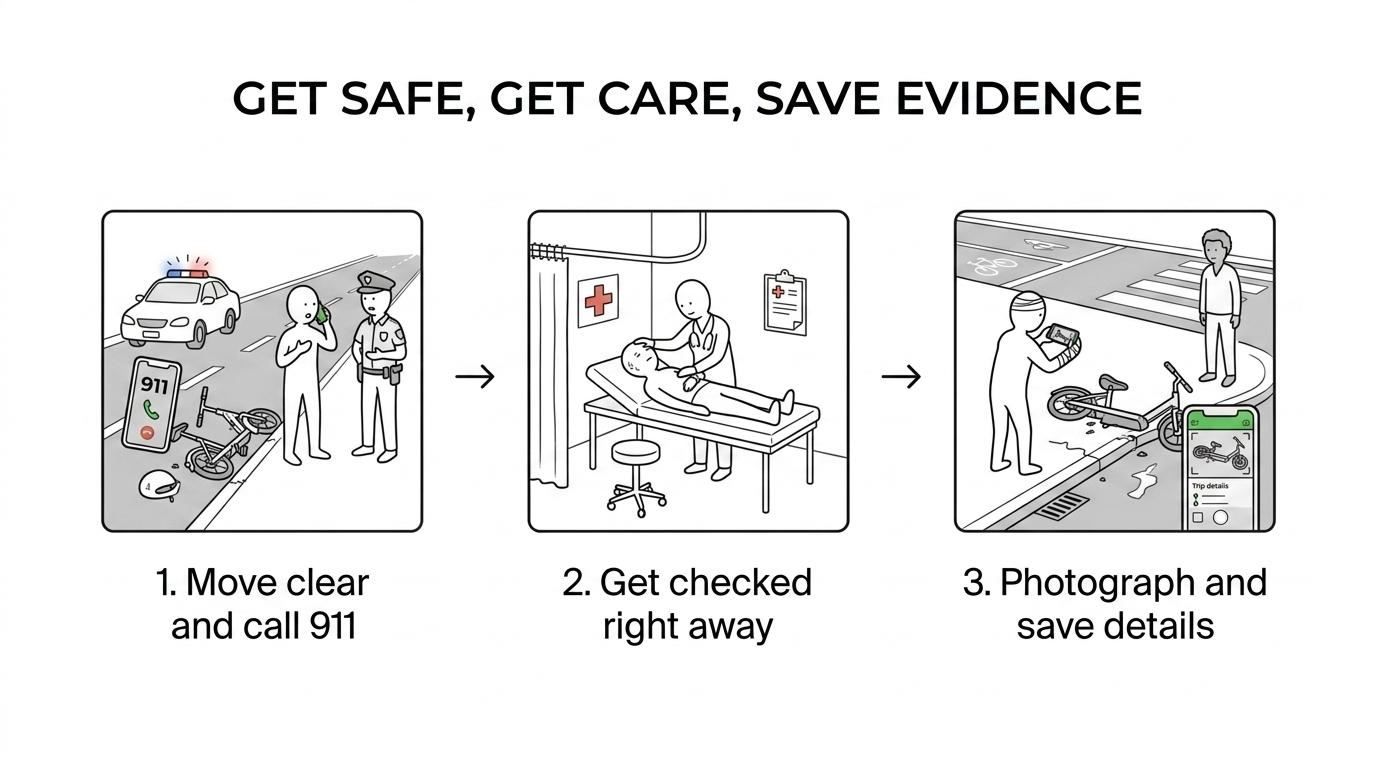
The third step is preserving evidence. A crash scene near The Rock or the MSU Union can look normal again in minutes. Witnesses leave. Scooters get moved. A rideshare driver takes off. Rain starts. Street lighting changes. If you can safely do it, document everything.
Here is a strong starting checklist after an MSU-area bike or scooter crash:
- Call for help: Report the crash and ask for medical attention if you are hurt
- Photograph the scene: Capture the road, bike lane, sidewalk, crosswalk, curb, damage, and visible injuries
- Get names: Witnesses, drivers, police, campus security, and nearby businesses
- Save digital evidence: Scooter app trip details, texts, location history, class schedule timing, and ride receipts
- Seek treatment: Go to urgent care, an emergency room, or your doctor as soon as possible
- Be careful with insurers: Do not guess, minimize your injuries, or accept quick blame during a recorded statement
Students should also tell a parent or trusted adult early. Parents do not need every detail in the first five minutes, but they should know enough to help with medical care, insurance issues, and the next steps. A calm, organized response beats a rushed one every time.
How liability works in MSU and East Lansing scooter accident claims
When you are hurt near campus, liability often starts with one basic question: who created the unsafe situation? In some cases, it is clearly a driver who failed to yield while turning across a bike lane. In others, the answer takes more work because several people or entities may be involved.
A driver may be at fault if they were speeding, distracted, opening a door into a cyclist, failing to yield, or passing too closely. That can happen on major routes and on smaller campus-adjacent roads where drivers get impatient. It can also involve delivery vehicles near apartment buildings, rideshare pickups outside bars and restaurants on Grand River, or commercial vehicles serving campus facilities.
A shared scooter operator may become part of the picture if maintenance issues, app records, or a known parking pattern contributed to the crash. Property owners can matter when poor lighting, hidden defects, or dangerous surface conditions played a role. Public entities sometimes come up when road design, signal issues, or roadway maintenance are part of the story, though claims involving government bodies have strict rules and short time frames.
Campus rule violations by the injured student do not automatically erase a case. If your scooter was not registered or you parked badly earlier in the day, that fact alone usually does not excuse a driver who cut you off. Still, those facts can be used to argue carelessness, so they need to be handled carefully and honestly.
This is where local knowledge helps. A case near MSU is not the same as a generic bike crash file from somewhere else in Michigan. The timing of class changes, student traffic near Beaumont Tower, heavy event traffic by Spartan Stadium, and the way downtown East Lansing fills up on weekends all shape how these incidents happen and how evidence should be gathered.
CTA: If you are dealing with medical bills, missed classes, or calls from insurance after an MSU scooter or bike crash, contact Ben Hall Law for a case review. You deserve a clear answer about your options before pressure from the other side starts to build.
Insurance issues parents and students should ask about right away
Many families are surprised to learn that insurance in a bike or scooter crash can depend on what hit the student. If a motor vehicle was involved, Michigan no-fault rules may come into play. That can affect payment for medical expenses and lost wages, and it can raise questions about which policy applies first. For out-of-state students and families, this can get confusing fast.
If no motor vehicle was involved, the insurance picture may look very different. A single-scooter crash, a bike-on-bike collision, or a fall caused by a sidewalk or roadway hazard may involve health insurance, renter’s insurance issues, liability coverage, or a third-party claim outside the no-fault system.
Parents should also think beyond the emergency room. You may be dealing with follow-up imaging, orthopedic care, physical therapy, concussion treatment, prescription costs, transportation limits, and lost income from a campus job or internship. When the student is trying to keep up with classes, those practical losses add up quickly.
What students can do now to lower the risk before a crash happens
You cannot control every driver or every sidewalk crowd around campus, but you can lower your odds of getting hurt. Start with the basics: register your bike or scooter, keep it in good working order, use lights at night, and know whether you are on a campus path, a sidewalk, or a roadway with traffic expectations that change block by block.
Students also do better when they treat short rides seriously. The route from an apartment near Cedar Village or a stop downtown to class can feel too short to matter. That is exactly when people skip helmets, ignore speed, ride with a passenger, or cut through a crowded sidewalk where nobody expects fast-moving wheels.
Make your habits predictable. Slow down near crosswalks. Assume a turning driver does not see you. Avoid headphones that block traffic sound. If weather is bad, leave earlier and give yourself time. The few minutes you save by rushing across campus are never worth a broken wrist or a concussion.
FAQ about MSU scooter and bike accidents
Do you have to register a bike or e-scooter at MSU?
Yes. MSU requires bicycles and e-bikes used on campus to be registered, and personal e-scooters operated on campus also need registration through Bike Index with the permit displayed. Registration is a campus compliance issue and can also help if your property is lost, stolen, or impounded.
If a student was not wearing a helmet, can they still have a claim?
Yes, in many cases. Lack of a helmet does not automatically erase a claim against a negligent driver or another responsible party. It may become part of the argument over injuries and fault, especially in head injury cases, which is one reason facts and medical records matter so much.
What if the crash happened on a sidewalk in East Lansing?
You may still have a claim, but city scooter rules could affect how fault is argued. East Lansing has a 10 mph sidewalk limit for scooters and parking rules meant to keep sidewalks, ramps, and crosswalks clear. The exact location, speed, witnesses, and type of vehicle involved all matter.
Can a parent help with the legal process if the student is overwhelmed?
Yes. Parents often help gather records, coordinate treatment, and deal with insurance communication, especially when the student is injured, missing class, or living away from home for the first time. That support can make a major difference during the first week after a crash.
Does Michigan no-fault apply to a bike or scooter accident?
It can, if a motor vehicle was involved. When a car, truck, bus, or rideshare vehicle hits a bicyclist or scooter rider, no-fault benefits may be available. If no motor vehicle was involved, different insurance rules may apply.
What should you do if a scooter or bike crash seems minor at first?
Get checked anyway, especially after a head impact, a fall onto your shoulder or wrist, or pain that starts later the same day. “Minor” is a poor label in the first hour after a crash. Concussion symptoms, fractures, and soft-tissue injuries often become clearer after the adrenaline fades.
Does a police report settle who was at fault?
No. A report matters, but it is only one part of the evidence. Photos, surveillance footage, medical records, app data, witness statements, and the physical scene may tell a much fuller story than the first report.
What if the student was partly at fault?
That does not always end the case. Many injury claims involve arguments about shared responsibility. A student may have made one mistake while a driver made a more serious one. The case still needs a careful review of what happened, where it happened, and how the injuries occurred.
If you are a student or parent dealing with a scooter or bike accident near MSU, the safest move is to act early, protect the evidence, and get answers before assumptions take over the case.