Campus Assault Allegations at MSU: What They Mean and What to Do
Introduction
A campus assault allegation at Michigan State University is overwhelming and urgent. In East Lansing, these cases often move in two directions at once, through the criminal courts and the university conduct process. What you say or do early on can affect both. Campus assault allegations are taken seriously across the United States. These situations frequently involve students who know each other, often with alcohol as a factor, and first-year students are considered at higher risk, especially early in the academic year.
Universities use Title IX investigations, which have different rules from criminal courts, to address these cases. At Ben Hall Law, the focus is on helping students avoid early mistakes that can lead to long-term consequences. This page explains what campus assault allegations mean, how they are handled at MSU, and what steps you should take right now to protect your academic standing and your future.
What Are Campus Assault Allegations?
Campus assault allegations claim a student engaged in unwanted physical contact, sexual activity, or behavior violating university rules. At schools like MSU, these incidents may involve misunderstandings, alcohol, or disputes. Assault can include more than serious physical harm, with campus definitions often broader than expected.
Difference Between Criminal Assault and University Allegations
One of the most important things to understand is that campus allegations are not handled the same way as criminal cases. In criminal court, prosecutors must prove a case beyond a reasonable doubt, a high standard. At the university level, cases are usually reviewed under a lower standard called preponderance of the evidence, meaning it is more likely than not that something occurred.
This difference matters because the same situation can lead to very different outcomes. A case that does not result in criminal charges can still lead to serious consequences through the university process. If you want a deeper understanding of how these systems work and how they interact, see Title IX vs Criminal Charges for a full breakdown.
Key Facts and Statistics About Campus Assault
Campus assault allegations are more common on college campuses than many students
expect, and understanding the facts helps put the situation into perspective. Research across the United States shows clear patterns in how and when these incidents occur.
- A significant percentage of college students report experiencing some form of sexual misconduct during their time in school.
- Alcohol is a common factor in social situations where allegations arise. Alcohol is a common factor in social situations where allegations arise.
- First-year students are often at higher risk, particularly during the early months of the academic year.
- Universities handle these cases in accordance with federal guidelines, which require schools to investigate and respond to reports promptly.
Federal law plays a major role in how colleges respond to these situations. Schools are required to follow specific procedures when handling allegations, even when no criminal charges are filed. You can review how these laws shape campus investigations through the DOJ Campus Assault Laws, which outline the responsibilities universities must follow when responding to student reports.
These facts show that campus assault allegations are not rare or isolated situations. They are taken seriously at every level, both legally and within the university system.
Why Campus Assault Allegations Are So Serious for MSU Students
A campus assault allegation at Michigan State University can affect much more than a single situation. Even before a case is resolved, it can begin to impact a student’s academic life, reputation, and future opportunities. On the academic side, MSU can take action quickly through its conduct process. Students may face temporary restrictions, removal from housing, or even suspension while an investigation is ongoing. These decisions can happen before any criminal case is decided, which means your education can be disrupted early in the process. From a legal standpoint, the consequences can also be serious.
Depending on the situation, an allegation may lead to misdemeanor or felony charges. A criminal record can affect background checks, internships, and job opportunities after graduation. Even if charges are reduced or dismissed, the situation itself can still leave a lasting impact. There is also a long-term effect that many students do not think about right away. Graduate school applications, professional licenses, and future employers often ask about past incidents or disciplinary actions. A single allegation can raise questions that follow you for years. This is why these cases need to be taken seriously from the beginning. What may seem like a misunderstanding or a private situation can quickly become a matter that affects both your academic standing and your future.
The Dual-System Problem: Criminal Case vs University Process
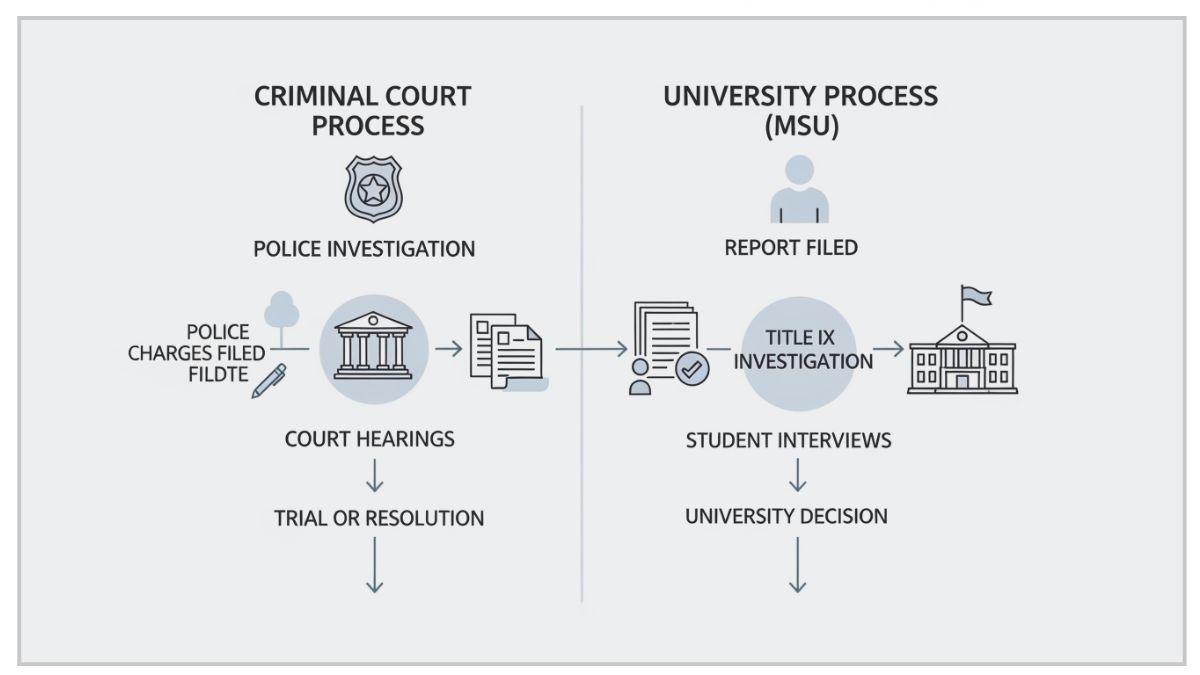
One of the biggest mistakes students make is assuming they are dealing with only one system. In reality, a campus assault allegation at Michigan State University can move through two separate processes at the same time. These systems are not connected, and they do not follow the same rules.
Criminal Court vs MSU Process
On the criminal side, the case is handled by law enforcement and the courts. Police investigate the situation, prosecutors decide whether to file charges, and the case moves through the court system. The standard of proof is high, which means the prosecution must prove the case beyond a reasonable doubt. At the same time, MSU may begin its own investigation through the university’s conduct system. This process is separate from the courts and is handled internally. The university uses a lower standard of proof, meaning they only need to find it more likely than not that a violation occurred.
The most important issue is that these two systems can affect each other. Statements made during a university investigation can later be used in a criminal case. Many students believe cooperating early will help resolve the situation faster, but it can actually create serious legal risks. Because both processes can move on different timelines, a student may be dealing with court hearings and university decisions at the same time. Understanding how these systems work together is critical because handling one incorrectly can damage the other.
What to Do Immediately If You Are Accused of Campus Assault
If you have been accused of campus assault at Michigan State University, the steps you take right now matter. Early decisions can shape both the criminal case and the university process, and mistakes made in the first hours or days are often difficult to fix later. First, do not speak to the police without legal advice. You have the right to remain silent, and using that right protects you. Trying to explain your side of the story too early can lead to statements being misunderstood or used against you. Second, do not speak to university investigators right away. Even though the process may seem informal, anything you say can still impact your situation. The university process does not provide the same protections as a criminal investigation. You should also avoid contacting the other person involved. Even a message meant to clear things up can create additional problems or be misinterpreted. The same applies to social media and text messages. Do not post or discuss the situation with friends.
Instead, focus on protecting yourself. Save any messages, photos, or communications that may be relevant. These details can become important later. Most importantly, speak with an attorney as soon as possible. Getting guidance early can help you avoid critical mistakes and protect your rights in both systems. If you are dealing with a situation like this, working with an experienced MSU Student Criminal Defense Lawyer can make a significant difference in how your case moves forward.
Common Situations Where Campus Assault Allegations Arise
Campus assault allegations at Michigan State University often come from situations that students do not expect to turn into serious issues. In many cases, these incidents begin in everyday social settings and escalate due to misunderstandings, alcohol use, or conflicting perspectives. One of the most common situations involves parties or gatherings where alcohol is present. When people are drinking, communication can become unclear, and actions may be interpreted differently by each person involved. What one person believes was mutual can later be viewed as non-consensus. Dorms and shared living spaces are another common setting. Disagreements between roommates or people on the same floor can quickly escalate, especially when emotions are high. These situations can lead to reports being filed even if the initial issue seemed minor. Dating and relationship situations also play a major role. Many allegations involve individuals who already know each other. After a disagreement or breakup, one person may report an incident that the other did not see as a violation at the time.
Misunderstandings around consent are often at the center of these cases. Students may not fully understand how consent is defined under university rules, especially when alcohol or mixed signals are involved. These situations show how quickly an everyday interaction can turn into a serious allegation, even when there was no clear intent to cause harm.
Alcohol, Consent, and Related Risks Students Overlook
Alcohol plays a major role in many campus assault allegations, and it often creates confusion about what actually happened. At Michigan State University, a large number of cases involve situations where one or both people had been drinking. This can affect judgment, communication, and the ability to clearly understand or give consent.
How Alcohol Impacts Consent and Legal Risk
When alcohol is involved, the issue of consent becomes more complicated. A person who is impaired may not be able to legally give consent, even if they appear to agree in the moment. This is where many students get caught off guard. What feels like a mutual interaction at the time can later be viewed very differently under university rules or the law. Alcohol related situations can also lead to multiple charges or violations at once. In some cases, a student may face issues similar to Underage DUI if there is evidence of operating a vehicle while impaired. In group settings such as parties or organization events, situations can overlap with concerns tied to Hazing Allegations at MSU, especially when alcohol use is part of the environment.
These overlapping risks are often overlooked. Students tend to focus on the immediate situation without realizing how quickly it can lead to serious legal and academic consequences.
How Campus Assault Cases Are Investigated at MSU
When a campus assault allegation is reported at Michigan State University, the case typically moves into a structured investigation process. This process is handled by the university and operates separately from any criminal investigation. Many students are not familiar with how this works, which can lead to confusion and mistakes early on.
Step-by-Step Investigation Process
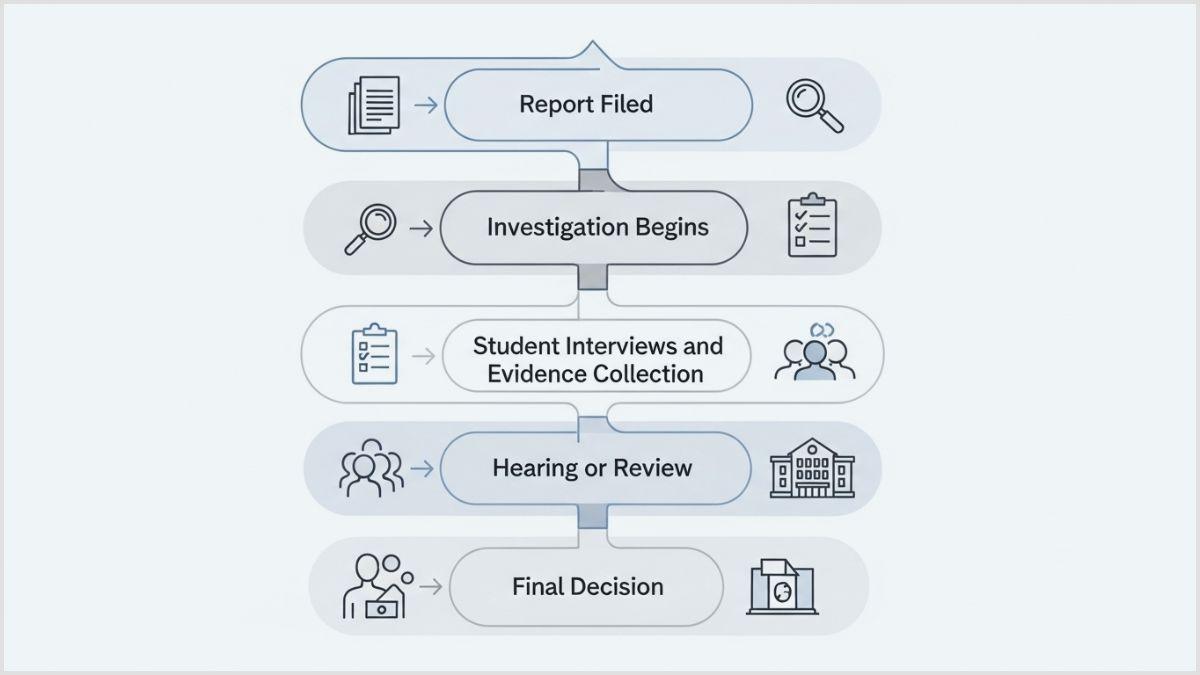
The process usually begins when a report is made to the university. This can come from a student, staff member, or another source. Once a report is received, MSU reviews the information to determine whether a formal investigation should move forward. If the case proceeds, an investigator is assigned. Both parties are contacted and given an opportunity to provide statements, submit evidence, and identify potential witnesses. This stage is important because the information collected here can shape the entire outcome.
The university may also gather additional evidence, including messages, photos, or other records related to the situation. Unlike a criminal case, the rules for evidence are more flexible, and a wider range of information may be considered. After the investigation is complete, the case may move to a hearing or decision phase. Based on the findings, the university determines whether a policy violation occurred and, if so, what consequences, if any, will apply. Understanding each step of this process is important because how you respond during the investigation can directly impact the final decision.
Possible Outcomes of a Campus Assault Case
Campus assault allegations can lead to different outcomes depending on how the case moves through both the legal system and the university process. It is important to understand that these outcomes are not always connected, and one does not control the other. On the criminal side, the case may result in charges being filed, reduced, or dismissed. Some cases are resolved through plea agreements, while others may go to trial. The outcome depends on the evidence, the circumstances, and how the case is handled from the beginning. A conviction can lead to penalties such as fines, probation, or even jail time, along with a permanent record. At the same time, Michigan State University can reach its own decision through the conduct process. A student may face disciplinary action even if there is no criminal conviction. Possible outcomes include warnings, probation, suspension, or expulsion. The university may also impose restrictions on housing, classes, or campus access. Long-term consequences are also important to consider. Both criminal records and university disciplinary actions can affect future opportunities. Employers, graduate programs, and licensing boards may require disclosure of past incidents.
Because these outcomes can vary and happen independently, it is critical to approach the situation carefully from the start.
Defense Strategies in Campus Assault Allegations
When a student is facing a campus assault allegation, the approach to defense matters from the very beginning. These cases are often complex and depend heavily on how the facts are presented, how evidence is handled, and how early decisions are made. A strong defense is not based on one argument, but on a careful review of the entire situation.
Key Legal Defense Approaches
One of the most important strategies is examining the evidence closely. In many cases, statements from the people involved may conflict or lack clear support. Identifying inconsistencies or gaps can significantly affect how the case is evaluated. Consent is also a central issue in many allegations. A defense may focus on whether there was a clear and voluntary agreement between both parties, and how that agreement was understood at the time. Context matters, especially in situations involving prior communication or ongoing relationships. Another important factor is whether the allegation is accurate or has been misunderstood. Some cases involve exaggeration or differing interpretations of the same event. Carefully reviewing timelines, messages, and witness accounts can help clarify what actually happened. Procedural issues can also play a role. This includes how evidence was collected, whether proper steps were followed during the investigation, and whether the student’s rights were respected throughout the process.
A well-planned defense considers all these elements together, with the goal of protecting both the student’s legal position and their academic future.
Local Context: MSU, East Lansing, and Ingham County Courts
Campus assault cases at Michigan State University are closely tied to the local legal system in East Lansing and Ingham County. Most misdemeanor cases are handled at the 54B District Court in East Lansing, which deals with a large number of student-related charges. More serious cases may move to the Ingham County Circuit Court. These cases can involve different law enforcement agencies, including MSU Police and the East Lansing Police Department. Each plays a role in how cases are investigated and charged. Understanding how the local courts and enforcement systems operate is important because procedures, timelines, and outcomes can vary based on where and how the case is handled.
Frequently Asked Questions About Campus Assault Allegations
Can MSU take action without a conviction?
Yes. Michigan State University can take action through its conduct process even if there is no criminal conviction. The university uses a lower standard of proof, meaning a student can face disciplinary action based on what is more likely than not to have happened. This is why campus assault allegations can lead to suspension or expulsion, even when criminal charges are reduced or dismissed.
Should I talk to investigators?
You should be careful before speaking with the police or university investigators. Even if the conversation seems informal, your statements can be used later in both the criminal case and the university process. In situations involving campus assault allegations or Title IX investigations, it is usually best to understand your rights and options before responding.
Will this affect my future?
Yes, it can. Campus assault allegations can impact your academic record, job opportunities, and future applications. Background checks, graduate school admissions, and professional licensing boards may all require disclosure of past incidents. Even without a conviction, the situation itself can raise concerns that follow you long-term.
What if the allegation is false?
False or misunderstood allegations do happen, but they still need to be taken seriously. These cases often depend on evidence, communication records, and how the situation is presented. Responding carefully and early can make a significant difference in how the case develops. Working with Ben Hall Law can help you understand your options, protect your rights, and build a stronger response from the beginning.
Get Legal Help for Campus Assault Allegations at MSU
If you are dealing with campus assault allegations at Michigan State University, the most important step you can take is getting the right guidance early. Waiting or trying to handle the situation on your own can lead to mistakes that affect both your case and your future. These situations move quickly. You may be facing a university investigation, possible criminal charges, or both at the same time. Each step you take can impact the outcome, and early decisions often carry the most weight.
Speaking with an experienced MSU Student Criminal Defense Lawyer at Ben Hall Law can help you understand your options, protect your rights, and avoid common mistakes. The goal is not just to respond to the allegation, but to protect your academic standing and your long-term future.
If something has happened, do not wait. Take action now and get clear guidance on what to do next.
 877-Ben-Hall