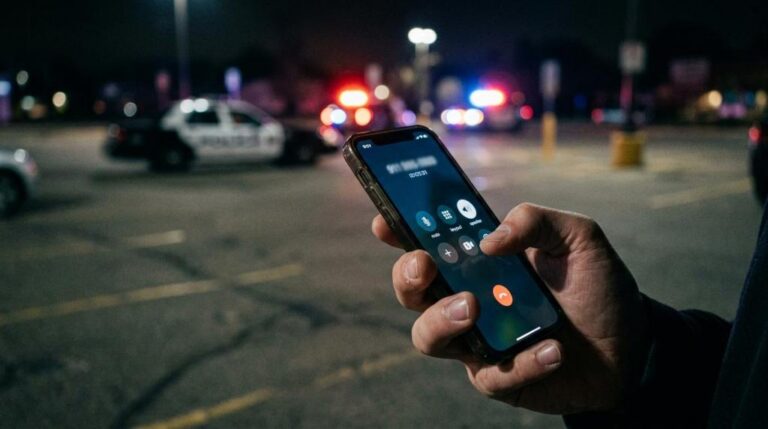


Prosecutors have a massive amount of discretion when deciding to file charges in a criminal case. If you’re reading this, there’s a good chance you or someone you care about is under investigation or you’re worried a charge is coming. That uncertainty is one of the most stressful experiences a person can face. Your life feels suspended while someone else holds the decision-making power.
Here’s what most people don’t know: that person isn’t the police.
As a former Michigan prosecutor, I sat on the other side of that decision every single day. I reviewed warrant requests, weighed evidence, and made the call: charge or decline. The process isn’t arbitrary, but it also isn’t purely mechanical. If you’re under investigation in Michigan, understanding how prosecutors decide whether to file charges can change how you respond.
In Michigan, police investigate and submit a warrant request, but prosecutors decide whether to file charges. The legal minimum is probable cause. Careful prosecutors also ask whether the case can be proven to a jury. That decision often turns on witness credibility, corroboration, and whether defenses like self-defense or mistaken identity undermine the proof.
This article explains how charging decisions are made in Michigan, from warrant request to authorization or denial.
Who Actually Decides to File Criminal Charges in Michigan?
One of the most persistent misconceptions in criminal law is that police file charges. They don’t. Police investigate crimes, make arrests, and submit warrant requests. But the charging decision, the formal authorization of criminal charges, belongs to the prosecutor.
When police believe they have enough evidence against a suspect, they compile their reports, witness statements, and evidence into a packet and submit it to the prosecutor’s office. That packet lands on a prosecutor’s desk, and from that point forward, the police are less involved. The prosecutor independently reviews everything and decides whether to authorize charges, decline the request, or request additional investigation. If charges are authorized, the prosecutor prepares the complaint and warrant request for a judge or magistrate to sign.
This distinction matters enormously. An arrest is not a charge. Being in custody does not mean charges are coming. Many warrant requests are declined or significantly modified before a single charge is ever filed. And in many cases, especially white-collar crimes, sexual assault investigations, or cases involving police officers, charges can come months or even years after the initial incident, long after a suspect thought the matter had passed.
It’s also worth noting that this process doesn’t look the same everywhere in Michigan. The state has 83 counties, and each county prosecutor’s office operates with its own resources, caseload pressures, and charging culture. A rural county like Shiawassee operates very differently from a large urban office like Wayne County. Caseload volume, staffing levels, and local priorities all shape how thoroughly any given warrant request gets reviewed. That variation is real, and it matters.
The Legal Standard: What Is “Probable Cause”?
The legal threshold for filing charges in Michigan is probable cause. Legally speaking, this means a reasonable person, looking at the available facts, would conclude that a crime was committed and that this particular person committed it.
It’s a low bar. Probable cause is not proof beyond a reasonable doubt. It’s not even a preponderance of the evidence. It’s the minimum constitutional floor required before the government can charge someone with a crime.
But here’s what most people miss: probable cause is the floor, not the ceiling. Careful prosecutors don’t stop at asking “is there probable cause?” They ask a harder question: “Can I prove this case to a jury?” A case can clear the probable cause threshold and still be a disaster at trial. Weak corroboration, a credibility problem with the main witness, or a sympathetic defendant can all doom an otherwise chargeable case.
Careful prosecutors think about trial risk and jury appeal from the moment they open the file. Timing matters too — Michigan’s statute of limitations rules are in MCL 767.24, and long investigations can create deadlines people don’t expect. And even after charges are authorized, felony cases typically face another probable-cause filter at the preliminary examination in district court.
How Prosecutors Decide to File Charges in Michigan: My Step-by-Step Review
Every prosecutor develops their own approach, but the core evaluation process follows a consistent logic. Here’s how I worked through a warrant request.
Step 1: Identify the exact crime being alleged.
Every criminal offense is defined by a set of statutory elements. The prosecution must prove each element beyond a reasonable doubt at trial. So the first question is always: what exactly are we charging, and do the facts in this file support each required element? If even one element is missing or unsupported, the case fails regardless of how bad the defendant’s conduct looks on paper.
Step 2: Review the police report critically.
Police reports are advocacy documents. Officers are trained to build cases, not to play devil’s advocate. I looked for what was missing as much as what was there. Were assumptions presented as facts? Did the police explore alternative explanations? Are witness accounts fully documented or selectively summarized?
Step 3: Evaluate witness credibility.
This is often the deciding factor in a case. I asked: Does this witness have a criminal history that a defense attorney will expose? Do they have a motive to lie, such as a custody dispute, a financial conflict, or a personal grudge? Have they made inconsistent statements? Witnesses who look compelling in a police report can fall apart on cross-examination, and I needed to anticipate that before filing.
Step 4: Assess physical and digital evidence.
Body camera footage, surveillance video, text messages, medical records, and forensic reports can make or break a case. This evidence is harder to impeach than testimony, which makes it invaluable when it supports the charge and devastating when it contradicts it. I’ve declined cases because the body cam footage told a completely different story than the police report.
Step 5: Consider the defenses that will be raised.
A charging decision made without anticipating the defense is an incomplete one. Self-defense, consent, mistaken identity, lack of intent: these aren’t surprises that emerge at trial. They’re predictable responses that prosecutors should account for at the outset. If I couldn’t see a clear path through the most obvious defense, I had to reconsider whether to charge at all.
Step 6: Ask, could I prove this to a jury?
This is the ultimate question. Not “did this person probably do it?” but “can I stand up in a courtroom and prove it?” A hunch isn’t a case. Neither is moral certainty without evidence. Juries need a coherent, credible narrative supported by admissible evidence, and it was my job to assess whether that existed before filing.
Speak With a Defense Attorney Today
Why Discretion Matters: The Cases That Don’t Get Charged
Probable cause alone doesn’t guarantee a prosecution. Prosecutors exercise broad discretion, and many cases that technically meet the legal threshold are still declined.
The most common reason is insufficient evidence, not because a crime didn’t happen, but because the available evidence isn’t strong enough to sustain a conviction. Conflicting witness accounts, no corroboration, forensic results that don’t land where they need to: these all create reasonable doubt before trial even begins.
Credibility problems are a close second. If the primary witness has a history of dishonesty, an obvious motive to lie, or has already given inconsistent statements, defense counsel will expose that at trial. A case built on a foundation that will visibly collapse under cross-examination is not a case worth charging.
Mitigating circumstances also influence the decision. A first-time offender who played a minor role in an incident, someone experiencing a documented mental health crisis, or a defendant who has already suffered significant collateral consequences: these factors don’t eliminate probable cause, but they legitimately inform how a prosecutor exercises discretion.
Michigan also has formal diversion mechanisms that reflect this reality. In eligible cases, HYTA may allow someone who committed an offense before their 26th birthday to avoid a public conviction, and prosecutors often have a say in whether that path is available.
The office also decides whether to file a habitual-offender notice under Michigan law, which can raise the maximum penalty and significantly increase leverage in a case.
And yes, resource allocation matters. Prosecutors’ offices operate under real constraints. Court backlogs, staffing limitations, and community priorities all influence which cases get fully prosecuted and which ones are diverted or declined.
When Discretion Goes Wrong
It would be dishonest to discuss prosecutorial discretion without acknowledging its darker side. The same broad authority that allows a prosecutor to do justice in a close case can also be abused. Charges are sometimes filed not because the evidence demands it, but because of political pressure, personal bias, or a desire to use the charging process as leverage. A defendant who can’t afford bail suddenly has every incentive to plead guilty to something they didn’t do, simply to get out of custody.
Research in multiple jurisdictions has found racial disparities at discretionary decision points in the system, including charging. And Michigan has seen direct local efforts to measure that. Analysis tied to Washtenaw County’s Prosecutor Transparency Project examined prosecutorial decision-making from 2017 to 2022, including case approval (warrant authorization) and charge selection, and reported racial disparities at those decision points. Washtenaw is one county, but it illustrates how discretion, without accountability, can produce unequal outcomes. And statewide racial disparities in Michigan’s criminal legal system provide context for why charging decisions matter so much.
None of this means every prosecutor is acting in bad faith. Most aren’t. But it does mean that the process is not purely objective, and that having an experienced defense attorney who understands how to push back on a charging decision is not just helpful. It’s often essential.
What Happens Before Charges Are Filed in Michigan?
From the outside, the pre-charge phase is largely invisible, which is exactly what makes it so anxiety-inducing for suspects.
It begins with the police investigation: interviews, evidence collection, search warrant execution. Then comes the warrant request submission, where police package their evidence and formally ask the prosecutor to authorize charges. The prosecutor’s review timeline varies significantly. Serious in-custody felonies are reviewed same-day or within hours. Complex financial crimes, sexual assault cases, or investigations involving public officials can take weeks or months.
In some cases, particularly white-collar crimes, CSC allegations, or officer-involved incidents, you may not even know you’re under investigation until charges are filed or a warrant is executed.
If you believe you’re under investigation in Michigan, the best time to get counsel involved is before the charging decision is made. Once charges are authorized, your options narrow fast.
Why Talking to Police Often Leads to Charges
I’ve seen dozens of cases where the evidence alone might not have supported charges, but the suspect’s own statement sealed it.
People believe that if they just explain themselves, the situation will resolve in their favor. That’s almost never how it works. Their job is to gather evidence, not to advocate for you. When you speak without counsel, you are voluntarily contributing to the case against yourself.
Admissions, even partial ones, are extraordinarily powerful. You don’t have to confess outright for your statement to damage you. Admitting you were present, that you sent a particular message, or that you were angry at the victim can supply the missing element the prosecutor needed to file.
Inconsistencies are equally dangerous. Memory is imperfect. Details shift. When your second account of events differs from your first, even innocuously, investigators and prosecutors treat that as evidence of deception.
Your constitutional right to remain silent exists for good reason. Invoking it is not suspicious. It is strategic.
How Defense Attorneys Influence Charging Decisions
What most people don’t realize is that the charging decision is not always final before defense counsel gets involved. Early intervention by an experienced criminal defense attorney can genuinely affect whether charges are filed and what those charges look like.
A skilled defense attorney can contact the prosecutor before authorization is made, present exculpatory evidence the police didn’t gather or include, or raise legal arguments that challenge probable cause. They can submit mitigation packets including background information, character letters, and documentation of mental health treatment, which humanize the client before the prosecutor ever assigns a face to the name in the file.
In some cases, attorneys negotiate reduced charges before anything is ever filed. A felony becomes a misdemeanor. A serious charge becomes a divertible offense. These outcomes are far more achievable before a charging decision is finalized than after.
If you know you’re under investigation, waiting is the worst strategy available to you.
Common Myths About Charging Decisions
“If I wasn’t arrested, I won’t be charged.” False. Prosecutors can authorize charges against someone who was never arrested. A warrant gets issued, and you’re picked up later, often at the worst possible moment.
“If the victim doesn’t want charges, the case disappears.” Not necessarily. Prosecutors can and do file charges without victim cooperation, particularly in domestic violence and serious felony cases. The victim’s reluctance matters, but it doesn’t control the outcome.
“If I just explain my side, they’ll understand.” This is the most dangerous myth. Statements given without counsel rarely help suspects. They almost always help prosecutors.
“First-time offenders never get charged.” First-time status is a mitigating factor, not a shield. Serious crimes are charged regardless of prior record.
What This Means If You’re Under Investigation
You don’t control whether a prosecutor files charges. But you are not entirely without influence, either.
Do not speak to law enforcement without an attorney present. Do not attempt to contact witnesses or alleged victims. Preserve any evidence that supports your version of events. And most importantly, hire experienced criminal defense counsel as early as possible.
The advantage of understanding how prosecutors think is that it changes your strategy. You stop reacting and start anticipating. You know which weaknesses matter, which arguments carry weight, and where the leverage actually exists.
Charging decisions are structured, but they are made by human beings exercising discretion under conditions of uncertainty. The right attorney, presenting the right information, at the right moment, can change the outcome.
That window doesn’t stay open forever. If police have contacted you or you think a warrant request is coming, talk to a defense lawyer immediately, before you give a statement or try to “clear things up.”
Frequently Asked Questions
How long does a prosecutor have to file charges in Michigan?
It depends on the offense. Michigan’s statute of limitations rules are in MCL 767.24, and the timelines vary a lot:
- No limit: Murder and certain first-degree CSC offenses
- 10 years: Certain serious offenses including kidnapping, extortion, armed robbery, first-degree home invasion, assault with intent to commit murder, attempted murder, and manslaughter — with additional rules in some cases when the offender wasn’t identified right away
- Victim-age extensions: Some CSC and child abuse offenses run until the victim’s 21st birthday; certain CSC offenses extend to the victim’s 42nd birthday, with separate DNA-based rules that can also affect the timeline
- 6-year catchall: Most other felonies and misdemeanors
- Tolling: The clock can pause — for example, if a suspect leaves the state
If you’re concerned about timing in a particular case, an attorney can give you a precise answer based on the specific offense.
Can a prosecutor file charges without the victim’s consent?
Yes. Victims do not control charging decisions. Prosecutors may file charges based on physical evidence, witness testimony, or other corroboration even when the victim is uncooperative or requests that charges not be filed.
What is probable cause in Michigan?
Probable cause means a reasonable person, looking at the available facts and evidence, would conclude that a crime was committed and that the accused person committed it. It is a lower standard than proof beyond a reasonable doubt.
Can charges be filed after an arrest is declined?
Yes. If new evidence surfaces, witnesses come forward, or an investigation develops further, prosecutors can authorize charges even after an initial warrant request was denied, so long as the statute of limitations under MCL 767.24 hasn’t expired.
Should I hire a lawyer before charges are filed?
Yes, particularly if you know you’re under investigation, have been contacted by police, or were involved in an incident that could result in criminal liability. Early retention of defense counsel is almost always more effective than waiting for charges to arrive.
Schedule Your Free Consultation