

If you are stopped on Michigan water by a DNR conservation officer, you do not lose your Fourth Amendment rights just because you are on a boat. At the same time, boating law is not the same as a roadside traffic stop. Michigan gives conservation officers real authority to stop vessels, check paperwork, and in some cases inspect safety equipment without a warrant.
That does not mean they can treat every stop like an open-ended fishing expedition.
Published: July 25, 2026
By: Ben Hall | Attorney and Owner of Ben Hall Law | Marine Corps and Iraq War Veteran | Former Police Officer | Former Prosecutor
Michigan DNR conservation officers and boat stops in Michigan
In Michigan, DNR conservation officers are fully licensed law enforcement officers. They patrol state waters and enforce boating laws along with county marine units, local police on the water, and in some places federal agencies. If you spend time on Lake St. Clair, the Detroit River, Saginaw Bay, Grand Traverse Bay, Torch Lake, Higgins Lake, Lake Charlevoix, or even smaller spots like Lake Lansing, you can run into marine enforcement during a normal summer weekend.
That matters because many boaters assume water patrols have either unlimited power or almost no power. Neither view is right.
Michigan law lets an officer require the operator of a moving vessel to stop or come alongside when the officer is acting lawfully. The operator can also be asked for basic identifying information and the vessel’s certificate of number. So yes, a stop itself may be lawful even before a full search question ever comes up.
The next issue is the one most people actually care about: Can the officer inspect or search the boat without a warrant? The answer depends on why the stop happened and whether the vessel carries the right safety decal.
When a DNR officer can inspect a boat without a warrant in Michigan
Michigan’s marine code creates a split between boats that have a safety decal and boats that do not.
If your vessel does not bear the Michigan safety decal described by law, or an accepted equivalent from another state, the operator must submit to a reasonable inspection of the vessel and a reasonable inspection and test of its equipment. That means the officer can check safety-related items without first getting a warrant.
If your vessel does have the proper decal, the rule changes. A peace officer may not stop and inspect that decal-bearing vessel unless the officer has reasonable suspicion that the vessel or operator is violating a marine law or is otherwise engaged in criminal activity.
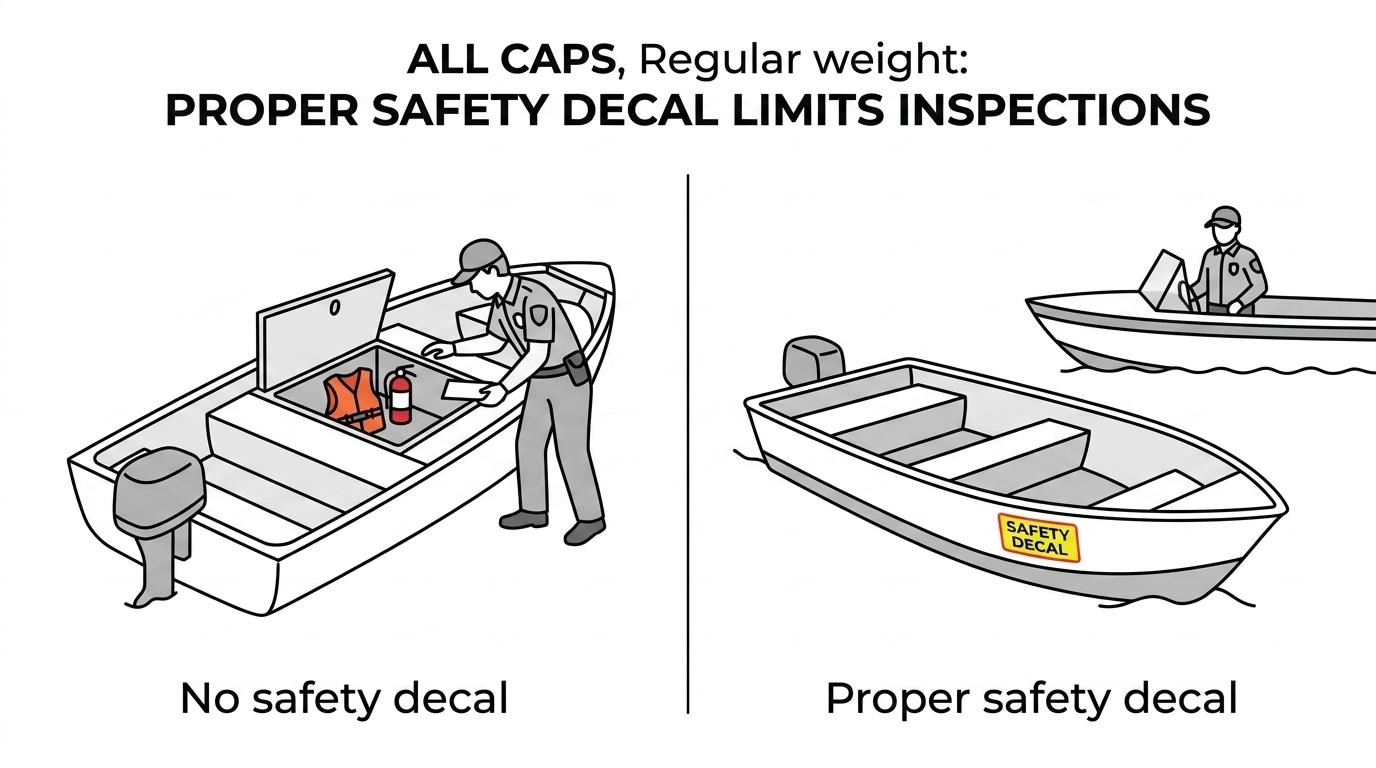
That is a major limit, and it is one many boaters do not know exists.
| Situation on Michigan waters | Can the officer stop you? | Can the officer inspect without a warrant? |
|---|---|---|
| Moving vessel, officer acting lawfully | Yes | Not automatically beyond lawful stop procedures |
| Vessel without required safety decal | Yes | Yes, for a reasonable vessel and equipment inspection |
| Decal-bearing vessel with no reasonable suspicion | Not for a stop-and-inspect under the statute | No routine inspection under that provision |
| Decal-bearing vessel with reasonable suspicion of marine law violation or crime | Yes | Yes, within the lawful scope of the stop and investigation |
| Officer observes a marine law violation or crime | Yes | Officer may also arrest without a warrant |
This is why the phrase “without a warrant” can be misleading. A lawful marine safety inspection is not the same thing as a free-form criminal search of every compartment, bag, and personal item on board.
What a reasonable boat inspection usually includes
During a lawful marine safety inspection, the officer is generally focused on the vessel, its required equipment, and its compliance with Michigan boating law. Think practical boating safety, not unlimited rummaging.
A reasonable inspection often involves checking items you are already required to carry or display.
- Registration: certificate of number and display compliance
- Life jackets: correct number, size, and accessibility
- Fire safety gear: extinguisher presence and condition
- Navigation equipment: lights, sound devices, and related required gear
- Operator issues: obvious signs of intoxication or reckless operation
If you are anchored near Belle Isle, cruising near Mackinac Island, crossing open water near Ludington, or idling through a no-wake area near a crowded marina in Holland or Traverse City, those same core rules still travel with you.
What counts as a search versus a safety inspection on a Michigan boat
This distinction matters more than most people realize.
A reasonable inspection is tied to the law that authorizes safety-related checks. A search usually means a more invasive look for evidence of a crime. Courts often examine the officer’s legal basis, the scope of the intrusion, and whether the officer had reasonable suspicion, probable cause, consent, or another recognized ground for going further.
So if an officer checks your registration, verifies life jackets, and looks at navigation lights, that fits comfortably within a marine safety inspection. If the officer starts opening closed containers, digging through storage well beyond safety gear, or looking for evidence unrelated to the reason for the stop, the legal question changes.
Michigan case law has also treated vessel searches through probable-cause and reasonableness principles. That is a reminder that boats are not law-free zones and they are not rights-free zones either.
A simple rule helps here: inspection authority is real, but it has edges.
Reasonable suspicion on Michigan waters can start with small facts
Reasonable suspicion is a lower standard than probable cause, but it still requires more than a hunch. On the water, an officer may build reasonable suspicion from what they personally observe.
You may see this after a wide turn in a no-wake zone, a near collision at dusk without proper navigation lights, a missing registration display, passengers sitting in unsafe positions while underway, or clear signs of impaired operation around a busy holiday weekend on Lake Fenton or Houghton Lake.
Common triggers include:
- Marine law violations: no-wake violations, reckless operation, towing violations, missing safety gear
- Visible impairment: slurred speech, balance problems, odor of alcohol, open containers in plain view
- Equipment issues: expired registration, missing lights, defective fire extinguisher, absent life jackets
- Other criminal activity: assault, illegal drugs in plain view, warrants, stolen property indicators
That matters for students and young boaters too. A summer afternoon that starts near East Lansing at Lake Lansing or moves west toward the Grand River can quickly become a criminal case if alcohol, disorderly conduct, or assault accusation gets mixed into a boat stop.
Can a DNR officer search coolers, storage compartments, or your phone?
Not every container on your boat becomes fair game just because you were stopped.
If the officer is conducting a valid safety inspection, the legal basis usually supports a reasonable look at areas connected to required equipment and vessel compliance. Whether that extends to a particular compartment depends on what the officer is looking for and why. A life-jacket compartment is different from a personal duffel bag. A check for a fire extinguisher is different from searching digital data on a phone.
Your phone is an even more serious privacy issue. A boat stop does not create a blank check to inspect digital data.
A few practical points can protect you without making a tough stop worse:
- Stay calm
- Keep your hands visible
- Provide the requested identification and vessel paperwork
- Do not physically resist
- Ask, politely, whether you are being inspected for safety or investigated for a violation
- If asked for consent to search beyond the basics, you can say you do not consent
That last point is often overlooked. If an officer already has legal grounds, your refusal may not stop the search. Still, you do not need to volunteer consent to broaden the encounter.
Warrantless arrest authority on Michigan boats
Michigan law separately allows a peace officer who observes drunk boating or the commission of a crime to make an arrest without a warrant. The officer may also issue a warning instead.
That means the legal question can move very quickly from “Can they inspect my boat?” to “Can they arrest me right now?”
If an officer directly observes drunk boating, reckless operation, an assault, a refusal to comply with stop commands, or another marine law offense, a warrant is not required before taking enforcement action. This is one reason boat stops around major destinations like Lake St. Clair’s Metropark area, the Muskegon waterfront, St. Joseph, Monroe, or the marinas near Bay City can escalate fast on busy weekends.
The same is true near high-traffic vacation spots. Around Torch Lake’s sandbar, Charlevoix, or the waters near Sleeping Bear Dunes, heavy boat traffic and alcohol use can produce exactly the kind of officer observations that trigger an arrest decision.
What this means if you are a Michigan boater, student, or visitor
If you are carrying the proper decal, you have stronger protection against random stop-and-inspect encounters. If you are not, Michigan law gives officers broader inspection authority tied to vessel safety. In both settings, observed violations and reasonable suspicion still matter.
That practical split can shape the outcome of a case.
A boating stop can lead to much more than a warning. You may face an OWI-type marine charge, a drug allegation, a disorderly conduct issue, an assault accusation, or even a student conduct problem if you attend Michigan State University and the incident reaches campus channels. What happens on a boat at Lake Lansing or a rental near Traverse City can follow you back to East Lansing, your job, or your professional license.
If the stop turned into a citation, arrest, or contested search, fast legal review matters. Police reports often use short phrases like “safety inspection,” “plain view,” or “observed violation,” but those labels do not end the analysis.
FAQ about DNR boat searches in Michigan
Can a DNR conservation officer stop my boat just to check paperwork?
Michigan law allows an officer acting lawfully to require a moving vessel to stop or come alongside and request identifying information and the certificate of number. Whether the officer can go further into an inspection depends on the vessel’s decal status and the facts of the stop.
If my boat has the proper safety decal, can I still be inspected without a warrant?
Yes, but not as a random inspection under the statute. For a decal-bearing vessel, the officer needs reasonable suspicion of a marine law violation or other criminal activity before conducting that kind of stop-and-inspect.
What is a reasonable inspection of a boat?
It usually means checking the vessel and required safety equipment for compliance. That can include registration, life jackets, navigation lights, and fire extinguishers. It does not automatically authorize a broad criminal search of everything on board.
Can a DNR officer arrest me on the water without a warrant?
Yes. If the officer observes a marine law violation or another crime, Michigan law allows a warrantless arrest.
Do I have to consent to a broader search of my boat?
You do not have to volunteer consent. You should stay polite and never physically interfere, but you can clearly state that you do not consent to a search beyond what the law requires.
Does this apply only on the Great Lakes?
No. These rules can matter on waters across the state, from Lake Michigan and Lake Huron to inland lakes and rivers near Lansing, Oakland County, the Grand Rapids area, and northern Michigan vacation destinations.
If a DNR stop led to charges, a boat search dispute, or a drunk boating arrest anywhere from Lake St. Clair to Grand Traverse Bay, you should treat it like any other criminal investigation: seriously, quickly, and with a clear plan.