


Police officers operate in an environment of intense scrutiny. A critical incident can trigger a criminal investigation, an internal investigation, administrative consequences, media attention, and potential damage to a career built over years of public service. When that happens, an officer needs counsel who understands both the criminal justice system and the realities of police work.
Ben Hall Law represents police officers throughout Michigan when their actions, careers, and freedom are under scrutiny. Ben brings an uncommon perspective to these cases: before becoming a defense attorney, he served as a police officer and prosecutor.

If you are a Michigan police officer involved in a critical incident, under investigation, or facing criminal charges, what you do next matters. Ben Hall understands the responsibilities, training, procedures, and split-second decisions that come with police work because he has done the job himself. He also understands how prosecutors build criminal cases. That experience allows the defense to begin from a position of practical understanding rather than having to learn police work from the outside.
At Ben Hall Law, your freedom and future are our priority.

Defense for Michigan Police Officers Facing Criminal Investigations and Charges
When a police officer becomes the subject of an investigation, the stakes extend far beyond the immediate allegation. Your freedom, reputation, employment, certification, pension, and future in law enforcement may all be affected. The defense must account for both the criminal case and the professional consequences that can develop alongside it.
As a former Michigan police officer, Ben Hall understands how officers are trained, how departments operate, and how decisions made in rapidly developing situations can later be examined frame by frame. As a former prosecutor, he also understands how investigators and prosecutors evaluate evidence and build cases. Police officer defense requires attention to both sides of that equation.
Every case must be judged on its own facts. An allegation against an officer does not establish wrongdoing, and conduct that appears questionable when viewed after the fact may look very different when considered in the context of the information, training, threats, and time available to the officer at the moment. Ben Hall Law represents law enforcement officers of all ranks and from agencies throughout Michigan, including:
- State, counties, cities, townships, and villages.
- Airports, railways, and parks.
- Tribal areas.
- Universities, community colleges, and public schools.
No matter the charges law enforcement faces, our skilled police defense attorneys will relentlessly represent your best interests in cases involving:
- Abuse of Authority.
- Assault.
- Corruption, bribery, and alleged official misconduct.
- Discrimination and Racial Profiling.
- Drug Crimes.
- Excessive use of force, including alleged failure to intervene.
- Extortion.
- Intimidation.
- Manslaughter and Murder
- Neglect of Duty.
- Perjury.
- Police officer misconduct and misconduct in office.
- Sexual Assault.
- Theft or Embezzlement.
- Wrongful Death.
Ben Hall Law approaches these cases with firsthand knowledge of both law enforcement and prosecution. That perspective can be especially important when evaluating an officer’s training and decision-making, reviewing reports and recorded evidence, identifying inconsistencies, preparing for interviews or testimony, and anticipating how prosecutors may characterize the officer’s conduct.
If you are under investigation or believe an incident may lead to criminal scrutiny, getting defense counsel involved early can help protect your rights and prevent avoidable mistakes before positions become fixed.
Are There Any Specific Legal Protections for Police Officers in Michigan?
Police officers accused of crimes in Michigan retain the constitutional protections available to other people facing criminal investigation or prosecution, including the right to remain silent, the right to counsel, protection against compelled self-incrimination, the presumption of innocence, and the right to a fair trial.
However, there are some factors and considerations that may be relevant when a police officer is charged with a crime in Michigan:
- Union Representation
Police officers may have representation from police unions or associations, which can provide legal support and assistance in navigating criminal and internal proceedings. - Internal Affairs Investigations
In addition to the criminal justice process, police departments may conduct internal investigations to determine whether the officer violated department policies or codes of conduct. These internal investigations can result in disciplinary actions separate from criminal charges. - Qualified Immunity
Qualified immunity is a legal doctrine that can protect government officials, including police officers, from civil liability for actions taken during their duties. However, qualified immunity does not shield officers from criminal prosecution. - Garrity Rights
Police officers do not surrender their constitutional rights because an investigation arises from their employment. When an officer is the subject of a criminal investigation, statements can have consequences in the criminal case. A separate issue arises when a public employer orders an officer to answer questions as a condition of employment. This is where Garrity protections become especially important.
Under Garrity v. New Jersey, a public employee generally cannot be forced to choose between self-incrimination and losing employment and then have the compelled statement used against them in a criminal prosecution. Whether a statement is compelled and what protections apply can depend on the circumstances, so officers should obtain legal advice before giving statements when criminal exposure is possible.
The interaction between an administrative investigation and a criminal investigation can become complicated quickly. Statements, reports, body-camera footage, departmental orders, union rights, and investigative procedures may all matter. Counsel familiar with these issues can help an officer understand which process is occurring and how to protect against unintended consequences in the other.
If you are a police officer involved in a critical incident, being investigated, or being charged with a crime in Michigan, it is crucial to obtain legal representation immediately to ensure your rights are protected from the start of your case. We understand your role as a cop in Michigan and want to help protect your livelihood.
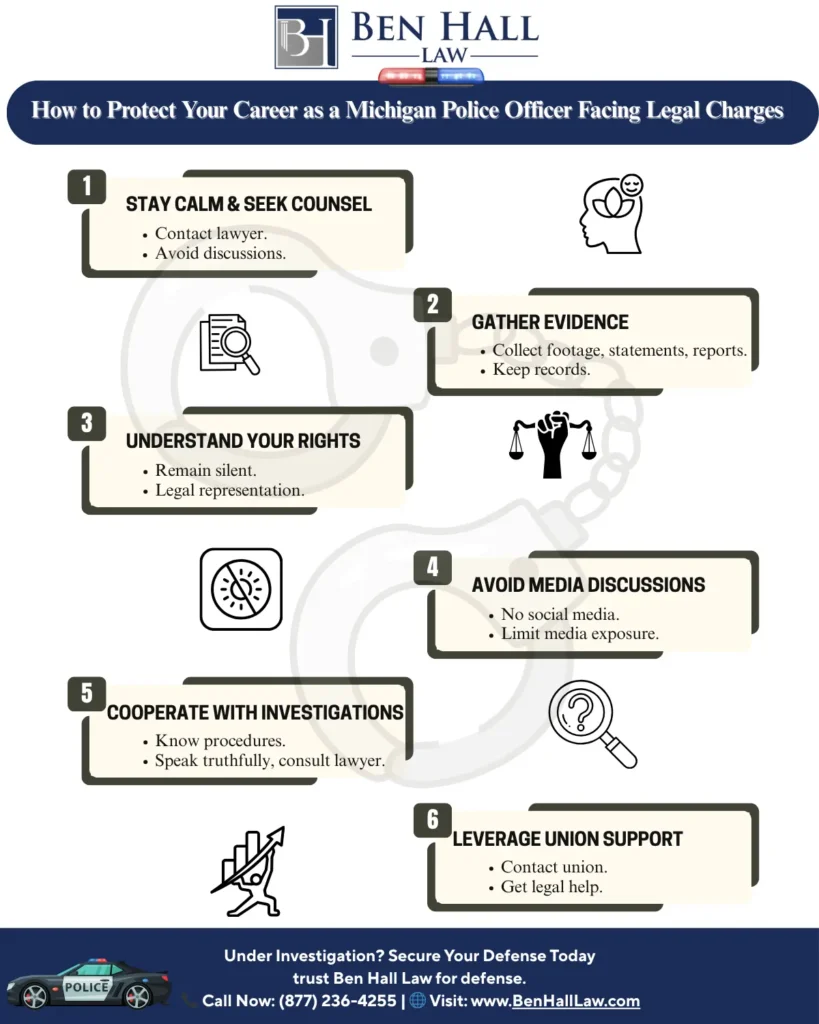
Contact our law enforcement defense attorneys in Michigan today to get the help you need.
Why Police Officers Turn to Ben Hall Law
Ben Hall Law brings experience from inside law enforcement, inside the prosecutor’s office, and inside the courtroom to the defense of Michigan police officers. We prepare serious cases with trial in mind from the beginning, while pursuing every available opportunity to stop an investigation from becoming a charge or resolve a case without trial when that serves the client’s interests.
If you are a police officer being investigated for a crime or have already been arrested and charged with a crime, invoke your rights immediately and contact our trusted legal defense team in Michigan to discuss your case with trusted professionals who believe in you and your case by calling 877-236-4255 or contacting us online.
Your fight is our fight. Let’s get started.
Frequently Asked Questions for Our Police Officer Defense Attorneys in Michigan
All charges against law enforcement are unique to the individual and must be outlined with a customized strategic approach to producing positive results. That means something different for everyone. However, generally speaking, common defense strategies may include demonstrating that the officer’s actions were reasonable, adhered to department policies, and were taken in the performance of their official duties.
Seeking experienced legal counsel is crucial. Officers should also cooperate with their attorneys and the necessary protocols, provide all relevant information to support their case, and follow their attorney’s guidance throughout the legal process.
Police officers, like anyone else, can assert self-defense if they reasonably believe they or others are in imminent danger of severe injury or death.
Cases involving police officers can attract significant public and media attention, influencing the legal and public relations strategies of all parties involved. It is the defense attorney’s job to protect the officer’s right to a fair process and fair trial. In an appropriate case, extensive prejudicial publicity may become relevant to jury selection, trial strategy, or a request for a change of venue.
Body-camera, dash-camera, surveillance, dispatch, and bystander video can be critical evidence, but a recording does not always tell the entire story by itself. The defense should evaluate video alongside the officer’s perspective, timing, available information, training, reports, witness accounts, and other evidence to establish the full context of the incident.